

Table of contents
Why Emotions Like Love Drive Consumer Decisions
Love isn’t just a feeling—it’s a neurological catalyst. Brands that harness emotions like love, belonging, or nostalgia tap into primal decision-making circuits in the brain. Studies in consumer psychology reveal that 95% of purchasing decisions are subconscious, driven by emotional triggers rather than logic. When a brand evokes love—whether through storytelling, imagery, or personalised experiences—it activates the brain’s reward system, fostering loyalty faster than any discount ever could.
For digital campaigns, this means moving beyond transactional messaging. Imagine a Valentine’s Day ad that doesn’t just sell chocolates but sells the idea of connection. Or a UI/UX design that mimics the warmth of human interaction through intuitive navigation. Emotions like love shorten the path from awareness to action, making them indispensable in crowded digital landscapes.
Valentine’s Day: A Catalyst `for Emotional Branding
Valentine’s Day isn’t just about roses and heart emojis. For brands, it’s a strategic playground to experiment with emotional resonance. Neuroscience shows that seasonal campaigns tied to universal emotions—like love—create stronger memory encoding. Think of Spotify’s “Couples Playlist” feature or John Lewis’ tear-jerking holiday ads scaled for February.
But the real magic lies in subtlety. Overly saccharine campaigns risk alienating audiences; instead, brands like Airbnb leverage “love” as a metaphor for inclusivity (“Belong Anywhere”). For digital agencies, this translates to crafting campaigns that balance sentiment with authenticity—using data-driven insights to pinpoint which emotional levers (nostalgia, joy, security) align with a brand’s identity.
The Neuroscience of Love in Marketing
The brain doesn’t distinguish between falling in love and falling for a brand—at least, not neurologically. Functional MRI scans reveal that emotionally charged branding activates the limbic system, the brain’s epicentre for memory and emotion. When users encounter a heartfelt social media post or a visually harmonious website, their amygdala and hippocampus light up, storing these experiences as “positive associations.”
For performance marketers, this means every click is a potential emotional imprint. A well-placed ad with evocative visuals (think warm hues, relatable faces) can bypass rational scrutiny and lodge itself in the subconscious. Even SEO isn’t immune: keywords like “timeless,” “cherish,” or “together” trigger emotional recall, nudging users toward conversion.
Neuromarketing Insights: Tapping into the Limbic System
Neuromarketing isn’t mind-reading—it’s brain-savvy strategy. By understanding how the limbic system governs decisions, brands can design campaigns that feel instinctive. For instance, scarcity tactics (“Limited Edition Valentine’s Bundle”) exploit the brain’s fear of missing out (FOMO), while storytelling in web design (e.g., scrolling narratives) mimics the brain’s preference for structured, emotional arcs.
Take colour psychology: red, synonymous with passion, increases heart rate and urgency—ideal for “Buy Now” buttons. Meanwhile, softer pinks evoke tenderness, perfect for brands targeting empathy-driven audiences. These micro-choices, rooted in neuroscience, transform static web pages into emotional journeys.
The Role of Dopamine in Brand Loyalty
Dopamine—the brain’s “reward chemical”—is the secret sauce of brand addiction. Every time a user receives a personalised email (“Just for you, Sarah”), unlocks a loyalty badge, or shares a Valentine’s campaign with a friend, their brain releases dopamine. This creates a feedback loop, linking pleasure to the brand experience.
Social media managers can weaponise this: Instagram’s “double-tap” validation or TikTok’s surprise viral trends are dopamine goldmines. Even in web development, features like progress bars (e.g., checkout trackers) or interactive micro-animations (e.g., floating hearts on hover) deliver mini-rewards that keep users hooked. The lesson? Love isn’t just felt—it’s engineered.
Brands that feel like a trusted friend
Companionate love in branding reflects a steady, reliable connection built over time. Unlike passionate brand love, which thrives on excitement, companionate brand love is about trust, familiarity, and consistency. Consumers develop this kind of relationship with brands that become part of their daily lives—ones they rely on without questioning. Supermarkets like Tesco, household names like Nivea, or financial institutions like Barclays thrive on this type of love. Their success isn’t based on flashy campaigns but on the quiet reassurance that they will always deliver.
This emotional connection is strengthened through consistent quality, strong customer service, and a sense of dependability. Customers who feel at ease with a brand are more likely to remain loyal even when competitors offer better deals. They trust that their preferred brand understands them, values their needs, and won’t let them down. This is why long-standing brands rarely need drastic rebranding; their strength lies in their stability, not reinvention.
Passionate love: brands that create excitement and devotion
Some brands ignite a more intense, almost obsessive form of love—one that resembles passion. This is the kind of brand attachment where consumers actively seek out new products, queue for launches, and defend their chosen brand against competitors. Luxury fashion labels like Chanel, technology giants like Apple, and even sports teams like Manchester United generate this level of emotional investment. Their customers don’t just buy a product; they buy into an identity, an experience, and a sense of belonging.
Passionate brand love thrives on exclusivity, novelty, and emotional storytelling. Limited-edition releases, brand rituals, and highly immersive campaigns create a sense of urgency and devotion. These brands also tend to have strong, charismatic identities—whether through visionary leaders like Steve Jobs or bold creative direction. Consumers who love these brands don’t just purchase out of necessity; they do so out of desire, loyalty, and a deep emotional connection that makes them brand evangelists.
Brand commitment: long-term loyalty and lifetime customers
Commitment in branding represents an enduring, long-term relationship between a consumer and a company. Unlike companionate love, which is built on trust, or passionate love, which thrives on excitement, commitment is about long-term investment. Customers who reach this level of brand love continue purchasing even when trends change, prices rise, or newer competitors enter the market. It’s the kind of loyalty that keeps generations of families using the same brand, like Coca-Cola, Levi’s, or Mercedes-Benz.
This deep level of commitment is nurtured through shared values, emotional storytelling, and personalisation. A brand that resonates with a consumer’s personal history, beliefs, or life experiences becomes more than a product—it becomes a symbol of identity. The key to securing committed brand love lies in consistency, evolving with customers while staying true to core values. The brands that master this balance don’t just attract buyers; they build legacies.
Coca-Cola: the emotional warmth of sharing and happiness
Coca-Cola has long positioned itself as more than just a beverage—it represents moments of joy, togetherness, and nostalgia. Through campaigns like “Share a Coke” and holiday adverts featuring the iconic Coca-Cola truck, the brand taps into a deep emotional reservoir. These campaigns don’t focus on taste or ingredients but on the experience of sharing a Coke with someone you love. The emotional trigger? Connection.
Its branding strategy is deeply rooted in positive emotional reinforcement, making it one of the most loved brands worldwide. Even in blind taste tests, where competitors sometimes win on flavour, Coca-Cola’s emotional imprint keeps it at the top. Customers remain loyal because the brand represents a feeling, not just a product.
Apple: the passionate love of exclusivity and identity
Apple’s branding is built on an almost cult-like devotion. Customers queue overnight for new product launches, defend the brand against critics, and remain loyal despite premium pricing. This level of passion is the result of meticulous brand positioning—Apple doesn’t just sell technology; it sells status, creativity, and exclusivity. The brand fosters an identity where owning an Apple device signals belonging to an elite, forward-thinking group.
Part of this emotional connection comes from Apple’s storytelling. Advertisements rarely showcase product specifications; instead, they focus on how the product enhances creativity, innovation, and personal expression. The “Think Different” campaign positioned Apple as a brand for visionaries, strengthening its emotional bond with users. This passion-driven attachment ensures that customers feel more than just satisfaction—they feel identity reinforcement.
Disney: nostalgic love and the magic of emotional storytelling
Disney’s brand love is deeply rooted in nostalgia. From childhood memories of animated films to family trips to Disneyland, the brand has cultivated emotional connections across generations. Disney doesn’t just create entertainment; it builds emotional universes where people can escape, relive childhood wonder, and bond with loved ones. This nostalgic attachment keeps fans engaged for life, passing their love for Disney down to new generations.
Through careful storytelling, Disney weaves emotion into every touchpoint—from the opening notes of a film to the immersive experiences of theme parks. Its success lies in its ability to make audiences feel something deeply personal. Whether through the emotional depth of Pixar films or the enchantment of Cinderella’s castle, Disney reinforces love, joy, and nostalgia in a way that keeps its brand irreplaceable.
The role of sensory branding in love-based marketing
Sensory branding plays a crucial role in triggering emotions and deepening brand attachment. Certain scents, textures, and sounds create instant connections in the brain, reinforcing emotional memories. Luxury brands often use scent to cultivate exclusivity—hotels like The Ritz-Carlton and retailers like Abercrombie & Fitch infuse signature fragrances into their environments, ensuring customers associate their experience with a distinct aroma. The scent-memory link is powerful, with studies showing that people can recall scents with 65% accuracy even after a year.
Touch and sound also enhance emotional connection. Packaging with premium textures, such as the soft matte finish of Apple’s product boxes, creates a subconscious feeling of quality. Sound is another powerful tool—brands like McDonald’s use jingles that become instantly recognisable and emotionally comforting. These sensory triggers influence consumer perception, making a brand experience feel more immersive and emotionally charged.
Case study: Tiffany & Co. and the psychology of luxury romance
Tiffany & Co. has mastered sensory branding to evoke romance, status, and sentimentality. The signature Tiffany Blue, a shade instantly recognised worldwide, is linked to exclusivity and elegance. Holding a Tiffany box triggers excitement and anticipation, reinforcing the brand’s emotional connection with love and commitment. The physical experience of unboxing a Tiffany product becomes part of the emotional journey.
Beyond visual branding, Tiffany’s uses subtle in-store elements to enhance sensory engagement. Soft lighting, gentle background music, and even the weight of their jewellery boxes create a luxurious, intimate atmosphere. These carefully curated sensory cues help strengthen emotional bonds with customers, making every purchase feel significant. The success of Tiffany’s branding is rooted in its ability to turn a simple transaction into an emotionally rich experience.
The rise of personal storytelling in Valentine’s campaigns
Social media has redefined how brands engage with love-driven marketing. Instead of traditional advertising, brands now use personal storytelling to connect with audiences on an emotional level. Valentine’s campaigns that incorporate user-generated content, love stories, or heartfelt moments generate higher engagement. People are more likely to share content that resonates with their own experiences, amplifying a brand’s message organically.
Successful campaigns tap into real emotions rather than clichés. Instead of pushing commercialised love, brands like Airbnb and Nike have celebrated diverse expressions of connection—friendship, family bonds, and self-love. These campaigns feel more authentic and inclusive, ensuring engagement beyond just romantic relationships. Brands that prioritise real stories over scripted narratives see stronger emotional responses from audiences.
Successful user-generated content examples
Encouraging users to share their own love stories enhances emotional engagement. Coca-Cola’s “Share a Coke”campaign successfully used personalised packaging to spark social media buzz. Customers shared images of their names on bottles, reinforcing both individual identity and emotional connection. The campaign turned a simple product into a personal experience, making it one of Coca-Cola’s most memorable marketing strategies.
Jewellery brand Pandora launched “The Unique Connection”, a campaign highlighting the bond between mothers and children. Blindfolded kids were asked to identify their mothers by touch, demonstrating the deep, non-verbal connections between loved ones. The emotional impact of the campaign made it highly shareable on social media, proving that authentic emotions drive engagement more than direct product promotion.
The brain’s response to emotionally charged marketing
Emotional marketing activates key areas of the brain associated with decision-making, memory, and reward. Studies in neuromarketing reveal that when consumers experience love-based advertising, the brain releases oxytocin, the same hormone responsible for bonding and trust. This reaction strengthens emotional attachment to a brand, increasing the likelihood of repeat purchases and word-of-mouth recommendations.
The brain does not distinguish between relationships with people and relationships with brands. Functional MRI scans have shown that strong brand connections activate the same neural circuits as romantic love. This explains why devoted customers feel genuine affection for their favourite brands, defending them with the same passion they would show for a loved one. Emotional triggers in advertising, such as nostalgic imagery or heartfelt storytelling, intensify these connections, making a brand feel indispensable.
The impact of oxytocin, dopamine, and brand attachment
Oxytocin plays a fundamental role in fostering trust and loyalty, but dopamine is what keeps consumers coming back. This neurotransmitter, linked to pleasure and motivation, is released when consumers engage with brands that bring excitement, exclusivity, or social validation. Luxury brands, for example, trigger dopamine surges through limited-edition products, status-driven marketing, and anticipation-driven launches.
Strong brand attachment is also reinforced through emotional consistency. When a brand repeatedly delivers positive experiences, the brain strengthens neural pathways that associate it with comfort and satisfaction. This is why brands like Starbucks create familiarity through consistent store layouts, menu offerings, and customer service. Every interaction reinforces emotional loyalty, ensuring that customers return not just out of habit but out of genuine emotional connection.
Creating love-driven campaigns beyond Valentine’s Day
Love-driven marketing should not be confined to a single day in February. Emotional connection is a year-round strategy that strengthens customer relationships and builds long-term loyalty. Brands that cultivate love-driven messaging throughout the year create deeper audience engagement, making their presence more meaningful. Campaigns that celebrate different forms of love—friendship, self-love, community appreciation—ensure a broader emotional reach.
Personalisation is one of the most effective ways to maintain emotional engagement. Customers respond positively to brands that acknowledge their individuality, whether through customised recommendations, personalised packaging, or exclusive experiences. Netflix, for example, builds brand love through tailored content suggestions, reinforcing the idea that the platform “understands” its users. The more a brand personalises interactions, the stronger the emotional connection becomes.
Building emotional loyalty through authenticity and consistency
Authenticity is the cornerstone of emotional branding. Consumers are quick to recognise and reject forced sentimentality, making genuine storytelling essential. Campaigns that highlight real experiences, feature actual customers, or embrace brand transparency build deeper trust. Patagonia, for instance, fosters emotional loyalty by aligning its brand with environmental activism, proving that its values go beyond profit.
Consistency ensures that emotional connections do not fade. A brand that repeatedly delivers on its promises strengthens consumer trust, keeping the emotional bond intact. Coca-Cola’s association with happiness, Nike’s motivational messaging, and Disney’s focus on nostalgia are all examples of how long-term consistency keeps brand love alive. Emotional marketing is not about short-term sentimentality—it is about creating lasting relationships that evolve with consumers over time.
The lasting power of love in branding
Emotional branding goes beyond seasonal campaigns and temporary engagement. When a brand taps into deep emotional connections, it moves from being just a product or service to becoming a part of a consumer’s identity. Customers who feel emotionally connected to a brand are far more likely to stay loyal, even when presented with cheaper or more convenient alternatives. Love in branding is not just about attracting attention—it is about securing a permanent place in the hearts and minds of consumers.
Companies that build emotional connections experience higher customer retention, stronger brand advocacy, and increased lifetime value per customer. Studies show that emotionally connected customers spend more and engage more frequently with brands they trust. Unlike transactional relationships, emotional bonds ensure that customers return not out of necessity, but out of desire. This makes emotional branding one of the most powerful tools for long-term business success.
The future of love-driven marketing beyond seasonal trends
The evolution of digital marketing has made emotional branding more relevant than ever. Consumers today expect brands to engage them on a personal level, offering experiences that feel authentic and meaningful. Emotional connections are no longer reserved for major brands—small businesses and startups that embrace personalised marketing, storytelling, and community-driven engagement can foster deep consumer loyalty.
Love-driven marketing must extend beyond Valentine’s Day or other seasonal moments. Brands that weave emotional narratives into their year-round strategy will stand out in an increasingly competitive landscape. As technology advances, AI-driven personalisation, immersive experiences, and real-time engagement will strengthen emotional connections even further. The future of branding belongs to those who understand that consumers do not just want to buy a product—they want to feel something when they engage with a brand.
FAQs
How does emotional branding influence consumer behaviour?
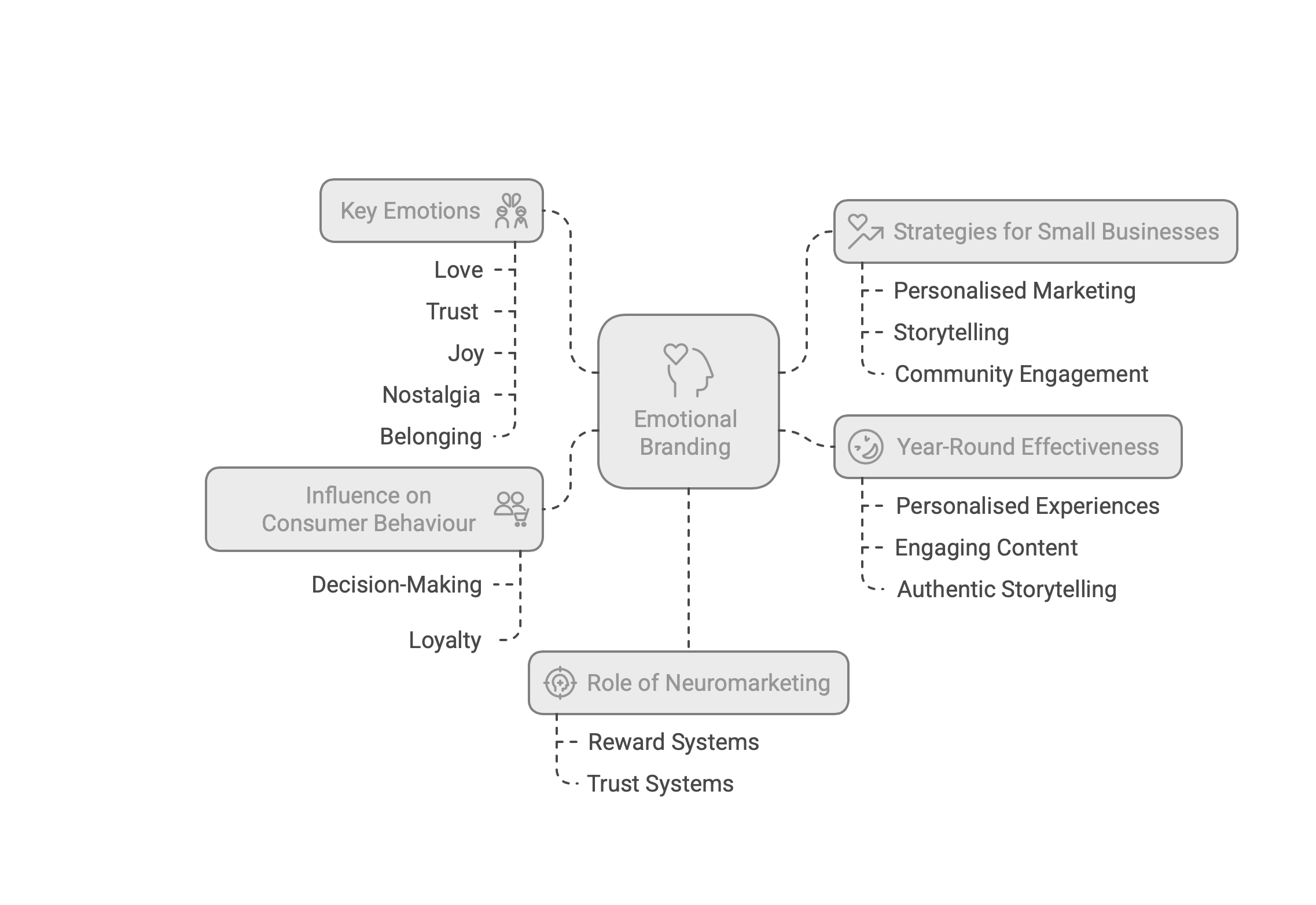
Emotional branding influences decision-making by creating deep psychological connections with consumers. When customers associate a brand with positive emotions such as trust, nostalgia, or excitement, they are more likely to stay loyal, engage with content, and recommend the brand to others.
What are the key emotions brands should focus on to build strong connections?
Love, trust, joy, nostalgia, and a sense of belonging are the most powerful emotions in branding. Brands that successfully evoke these emotions create lasting customer relationships and higher brand affinity.
How can small businesses incorporate love-driven marketing strategies?
Small businesses can build emotional connections by using personalised marketing, storytelling, and community engagement. Authentic interactions, user-generated content, and brand transparency help foster strong relationships with customers.
What role does neuromarketing play in emotional branding?
Neuromarketing studies show that emotional branding activates the brain’s reward and trust systems, increasing consumer engagement and brand loyalty. The release of oxytocin and dopamine during positive brand interactions strengthens long-term connections.
Can emotional branding work outside of seasonal campaigns like Valentine’s Day?
Yes, emotional branding is most effective when applied year-round. Brands that consistently create emotional narratives through personalised experiences, engaging content, and authentic storytelling build stronger, more enduring customer relationships.